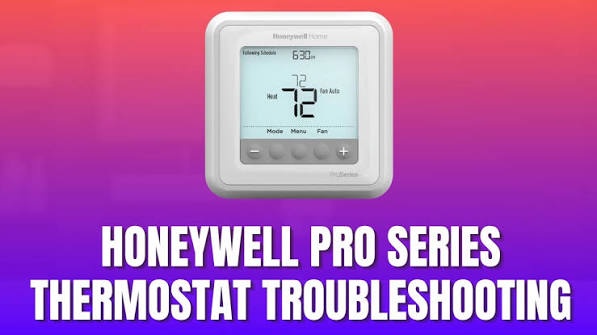
Smart thermostats have become an important part of modern home comfort systems. They allow homeowners to manage temperatures, create schedules, monitor energy use, and connect heating and cooling equipment with smart-home technology. As HVAC controls continue becoming more advanced in 2026, homeowners are also encountering features that may not be immediately obvious.
One commonly misunderstood function is the Hold setting. Understanding how this feature works can help homeowners manage their indoor temperature without unintentionally changing their programmed schedule.
The phrase what does hold mean on honeywell thermostat generally refers to a thermostat function that maintains a selected temperature instead of immediately following the programmed schedule. However, the exact behavior can vary depending on the specific thermostat model.
Programmable thermostats are designed to follow scheduled temperature changes. A homeowner might program a warmer setting for the morning, a lower setting while everyone is away, and another comfortable temperature for the evening.
The Hold feature allows the user to override the normal schedule temporarily or, on some models, indefinitely.
For example, imagine that a thermostat is programmed to reduce cooling during the afternoon because everyone normally leaves the house. If someone stays home unexpectedly, they can adjust the temperature and use Hold to maintain their preferred setting.
Depending on the thermostat model, the hold may remain active until the next programmed period or continue until the homeowner manually cancels it.
One of the most important distinctions is between temporary and permanent temperature overrides.
A temporary hold is designed for short-term changes. It can be useful when household routines change for a few hours. Once the programmed schedule resumes, the thermostat returns to its normal operation.
A permanent hold can maintain the selected temperature for a longer period. The thermostat will generally continue maintaining that setting until the homeowner cancels the hold or returns the system to its programmed schedule.
Because Honeywell Home offers multiple thermostat models, homeowners should consult the documentation for their specific device before assuming that every Hold function operates identically.
Daily schedules do not always remain predictable. Unexpected guests, working from home, holidays, school schedules, and changes in sleeping patterns can make a fixed thermostat program inconvenient.
Hold provides a simple way to make a temporary adjustment without completely rewriting the thermostat schedule.
This can be particularly useful for homeowners who have carefully programmed their thermostats for energy savings but occasionally need a different temperature.
Instead of deleting the existing schedule, they can use the appropriate override function and later return to normal programmed operation.
The role of thermostats is changing rapidly in 2026. Modern smart controls can incorporate occupancy sensors, weather information, geofencing, remote access, and adaptive scheduling.
Artificial intelligence and machine learning are also increasingly influencing residential climate management.
Rather than depending entirely on manually programmed temperature periods, intelligent systems can analyze household routines and make adjustments based on occupancy and environmental conditions.
These technologies can reduce the need for frequent manual temperature changes while potentially improving energy management.
Using a Hold setting does not automatically increase energy consumption. The impact depends on the temperature selected and how long the setting remains active.
For example, maintaining a moderate temperature for several additional hours may have a relatively small impact compared with maintaining an extreme heating or cooling setting continuously.
Homeowners should consider outdoor conditions, insulation, HVAC efficiency, humidity, and occupancy when choosing temperature settings.
Smart thermostats can also provide energy reports that help users understand how temperature changes influence equipment runtime.
Connected thermostats allow homeowners to adjust settings through compatible smartphone applications. This can be particularly useful when plans change unexpectedly.
A homeowner who leaves work early, returns from vacation sooner than expected, or realizes that the thermostat was left at an undesirable setting may be able to make an adjustment remotely.
Remote access also supports more convenient monitoring of indoor conditions.
However, connectivity problems do not necessarily mean that the HVAC equipment has failed. A thermostat may continue operating locally even when its internet connection is temporarily unavailable, depending on its design.
A common issue occurs when a homeowner changes the temperature and later discovers that the thermostat is not following the expected schedule.
An active Hold or manual override may be responsible.
If the thermostat continues maintaining the selected temperature, homeowners should check the display for indicators showing that a hold is active. The exact method for cancelling it depends on the thermostat model.
Returning the device to its normal schedule can restore the programmed temperature changes without requiring a factory reset.
Another important 2026 trend is the integration of smart thermostats with HVAC monitoring systems.
Connected equipment can collect information about runtime, temperature changes, and operating behavior. Advanced systems may analyze these patterns to identify unusual performance.
For example, an air conditioner that suddenly runs much longer than usual may indicate an airflow restriction, equipment issue, or changing outdoor conditions.
This type of information can help homeowners and HVAC professionals recognize potential problems earlier.
It is important to distinguish thermostat settings from actual HVAC equipment failures.
If a thermostat displays the desired temperature but the furnace, air conditioner, or heat pump does not operate correctly, the problem may involve the HVAC equipment, electrical system, airflow, controls, or another component.
Likewise, repeated power loss, unusual odors, damaged wiring, or frequent circuit-breaker trips require professional attention rather than repeated thermostat adjustments.
Homeowners should avoid modifying electrical wiring or bypassing HVAC safety controls.
The best approach is to understand the functions available on the specific thermostat model. Homeowners should create practical schedules, use temporary adjustments when appropriate, and periodically review automated settings.
If a Hold setting is no longer needed, returning the thermostat to its programmed schedule can prevent an unintended temperature from remaining active.
Regular HVAC maintenance should also accompany smart thermostat use. Clean filters, adequate airflow, properly maintained equipment, and professional inspections all contribute to efficient operation.
Smart thermostat technology is moving toward greater automation, connectivity, and energy awareness. Artificial intelligence, occupancy sensing, remote monitoring, adaptive scheduling, and predictive diagnostics are helping homeowners manage comfort more intelligently.
Understanding what does hold mean on honeywell thermostat is a small but useful part of becoming comfortable with modern HVAC controls.
Whether homeowners use temporary overrides, automated schedules, or remote controls, the goal remains the same: maintain comfortable indoor conditions while avoiding unnecessary HVAC operation.
As connected climate technology continues developing throughout 2026 and beyond, homeowners who combine intelligent controls with sensible settings and professional HVAC maintenance can create more comfortable, efficient, and reliable indoor environments.

This post has been authored and published by one of our premium contributors, who are experts in their fields. They bring high-quality, well-researched content that adds significant value to our platform.











Why Entertain Me brings readers the latest entertainment news, celebrity updates, lifestyle trends, and informative stories from around the world.